
2025 Was a Year of Recalibration at The Upper End of the Boston Market
Activity persisted, but it was selective. Buyers were deliberate, pricing discipline mattered, and many sellers chose patience over urgency. Overall pricing in the $2M+ segment declined by just under 3%, while transaction volume increased by nearly 4%. That combination defined the year. The market moved, but only when expectations aligned.
Let’s take a closer look at two of our core neighborhoods: South End & Back Bay.
The South End’s 2025 Sales Reinforced Several Long-Standing Truths:
In 2025, the South End recorded 115 sales over $2M totaling approximately $345M, firmly establishing itself as one of Boston’s most consistently liquid luxury markets.
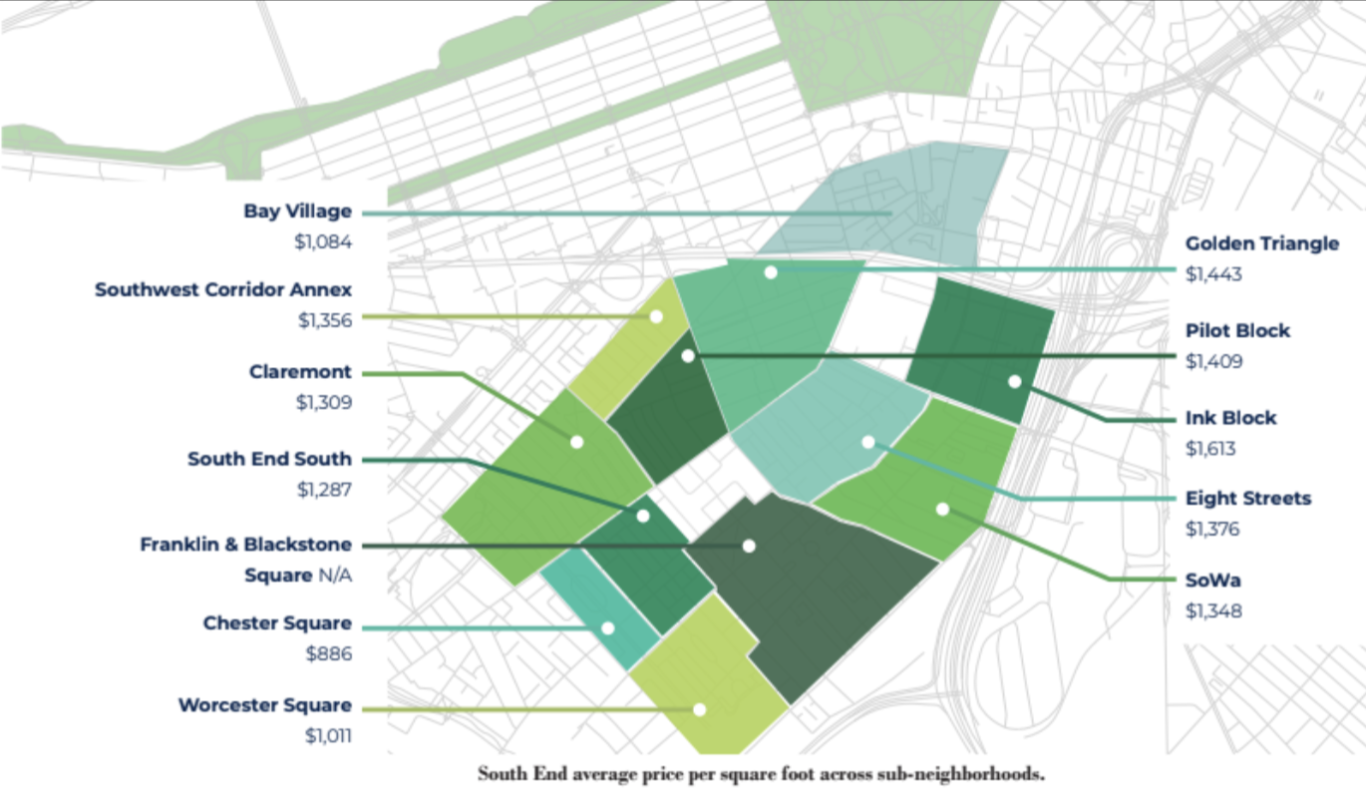
The South End remains reliably liquid, not because it reaches the highest highs, but because it avoids the lowest lows. Its strength lies in consistency, not spectacle.
- Liquidity lives between $2M – $5M
- Buyer depth is location-specific
- Core streets behave differently — and better — than peripheral ones
- Correct pricing is rewarded; optimism is not
- This is not a volatile market.
For sellers, success hinges on understanding which South End you own in — and pricing accordingly.
For buyers, the neighborhood continues to offer something increasingly rare in Boston: predictability. Not to mention a true neighborhood feel.
Sales Volume Rebalances Across Back Bay Sub-Neighborhoods:
Back Bay continues to prove that it is not a single market, but a collection of highly distinct micro markets that respond differently to shifting conditions.
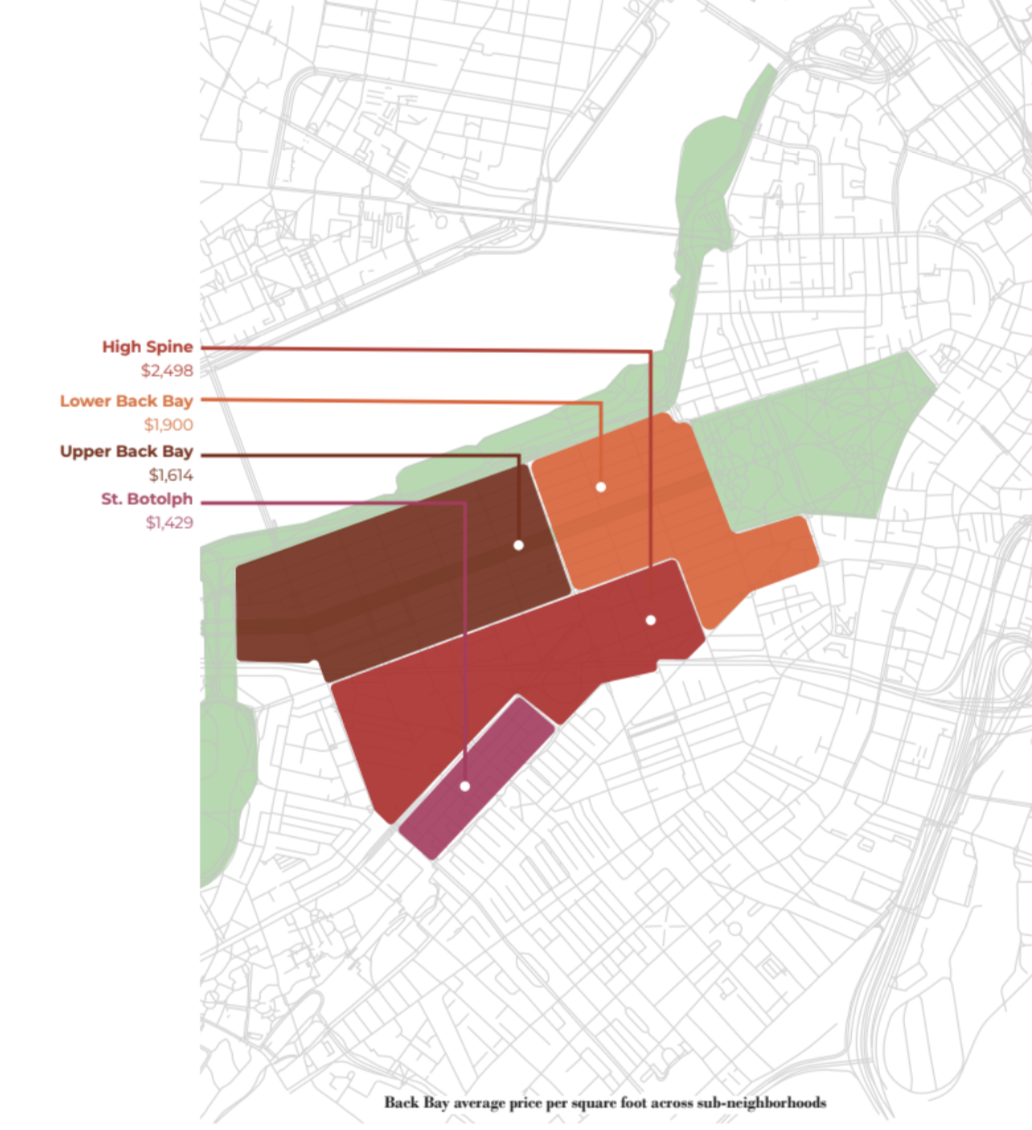
At a high level, sales activity across Back Bay was far more evenly distributed in 2025. Lower Back Bay, Upper Back Bay, and the High Spine each recorded sales volume just north of $224M — a sharp contrast to prior years, when one sub-neighborhood could outpace another by as much as 60%.
The Mandarin Oriental itself had a standout year relative to 2024, with sales dollar volume rising 6.17% year over year. Across eight transactions, the building generated $70,840,000 in sales.
The Raffles Residences, on the other hand, took a quieter seat this year. With fewer units trading, transaction count fell by 50% and sales volume declined 34%. Even so, the building independently contributed just over $55,000,000 to the High Spine’s overall total.
While the average price per square foot softened slightly in the High Spine, it remains the highest niche area in the City of Boston. In 2025, the High Spine averaged $2,533 per square foot, down 9% from 2024’s $2,785 average. Even with this adjustment, the pricing power of the High Spine is unmistakable.
Get your analytic review of Boston’s luxury real estate:
We believe when real estate consumers are presented with a complete and robust spread of data, in conjunction with their personal preferences, decisions can be reached with the most confidence. Discover the top luxury buildings driving market value in each neighborhood and more.